
Over the weekend of May 3, 2026, the global community celebrated World Press Freedom Day, culminating in the major international conference in Lusaka, Zambia, under the crucial theme of shaping a future at peace. While this day is historically dedicated to reflecting on the safety of journalists, democratic governance, and information integrity, its relevance extends far beyond the traditional political arena. In a world increasingly defined by climate change, biodiversity loss, and ecological collapse, environmental journalism has become a critical pillar in shaping peace, protecting human rights, and securing sustainable development. In Kenya and across the African continent, a free and independent press serves as the vital bridge between scientific discovery, policy accountability, and the vulnerable communities whose livelihoods depend on a healthy, balanced environment. As highlighted by UNESCO in their 2026 global evaluations, the boundaries between journalism, technology, civic space, and human rights are increasingly intertwined, demanding stronger information ecosystems that can withstand rising digital and systemic challenges.
In Kenya, the connection between a free press and conservation is more urgent than ever, especially considering the severe environmental problems the country faces, ranging from the degradation of natural resources like forests to inconsistent rainfall and extreme floods. Recent reports from the United Nations Framework Convention on Climate Change indicate that rising lake waters in Kenya’s Rift Valley have displaced over 75,000 households and put more than 379,000 people at risk, highlighting an immediate crisis of climate-induced displacement. In this environment of crisis, the media acts as an essential watchdog and storyteller that bridges the awareness gap. Research by scholars such as Booker and colleagues emphasizes that media interactions are crucial in raising public awareness about wildlife and habitat preservation. By bringing complex climate data into everyday public discourse, journalists reduce the divide between technical scientific research and the practical understanding of local citizens. Despite the importance of this role, a study focusing on Kenyan media by Scarlet Chebet Chemarum found that there remains a need for deeper, more investigative reporting to explain not just the visible extent of environmental damage, but also its underlying causes and potential solutions.
When examining the real-world impact of journalism on conservation, the work goes well beyond mere reporting because the media can actively intervene and halt environmental destruction. For instance, investigative journalism in Kenya has repeatedly exposed the dumping of toxic industrial waste into the Nairobi River basin. When local media outlets highlighted the dangers of heavy metals and chemicals entering the water table, the resulting public outcry pushed the National Environment Management Authority to enforce stricter compliance and initiate clean-up drives. Another prominent case involves the Mau Forest complex, an essential water tower in Kenya that was subjected to intense illegal logging. Exposes run by independent journalists revealed the extent of the destruction and the complicity of local syndicates, which forced the government to impose a moratorium on logging and to evict illegal settlers. Furthermore, sustained media campaigns amplified the advocacy that led to Kenya’s pioneering ban on single-use carrier bags and its ongoing efforts to curb single-use packaging, proving that continuous environmental coverage can drive meaningful policy change and protect vulnerable ecosystems.
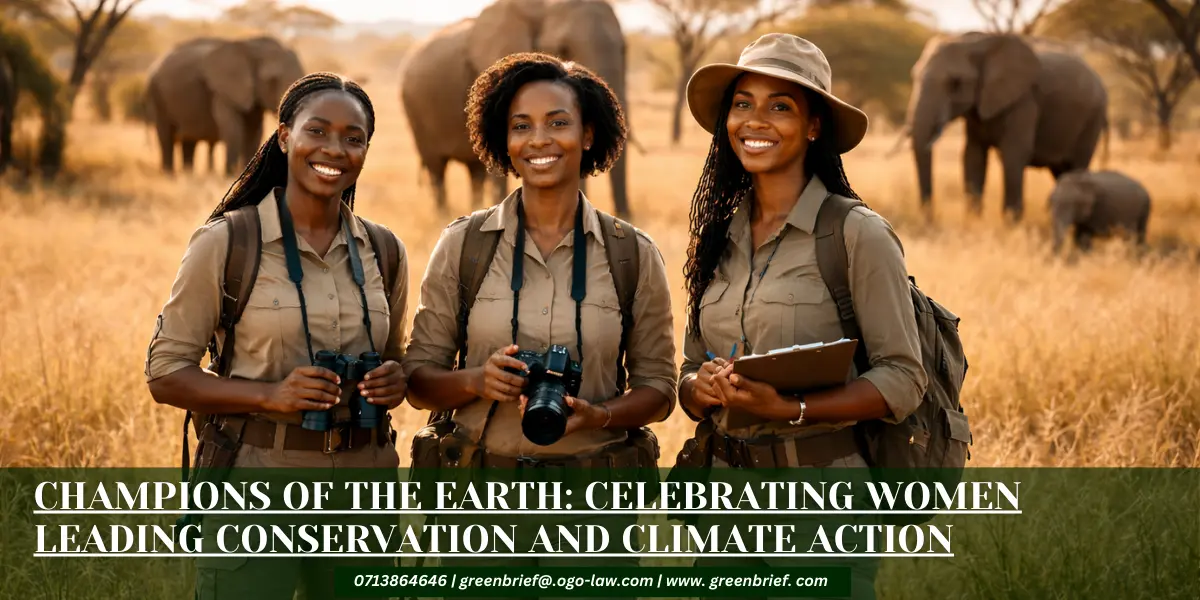
Across the broader African continent, similar efforts demonstrate how the press actively shapes environmental rights and peace. In the Congo Basin, journalists supported by the Rainforest Journalism Fund are uncovering the complexities of deforestation and working to protect one of the world’s most vital carbon sinks from unregulated exploitation. Similarly, in South Africa, investigations into socio-environmental consequences have compelled courts to reassess energy policies based on constitutional obligations and intergenerational equity. Female environmental journalists across the continent are also breaking patriarchal barriers to report from remote, often dangerous terrains, bringing unique perspectives to climate justice, water security, and resource management. Their work highlights social inequities, such as how prolonged drought exacerbates sexual and gender-based violence and forces girls out of school in vulnerable pastoral regions like Turkana. Through their storytelling, these journalists connect the abstract science of conservation to the lived realities of people, giving a voice to ecosystems that might otherwise be overlooked.
Despite these significant successes, environmental journalism is a challenging and often dangerous endeavor. The transition from general reporting to specialized, data-driven science reporting requires substantial resources, yet newsrooms frequently face falling consumption and lower advertising revenues. According to a study on journalism education by Booker and colleagues, the transition to sustainability models is essential to train reporters on how to communicate environmental issues clearly and accessibly. Furthermore, journalists investigating illegal wildlife trafficking, logging, or toxic pollution encounter intimidation, censorship, and threats to their safety. For instance, the Supreme Court of Kenya recently awarded 1.3 billion Kenyan shillings to the residents of Owino Uhuru after years of toxic lead emissions exposed by journalists and activists. This ruling illustrates the high stakes of environmental reporting, showing how accountability journalism directly holds both corporations and government agencies responsible for ecological harm. When the press is muzzled or self-censors due to economic pressure or fear of reprisals, the environment is left unprotected, and the risk of localized conflict over scarce resources increases.
As we reflect on World Press Freedom Day 2026, it is evident that a sustainable future for our environment cannot exist without a free press. Protecting truth-tellers, whether they are exposing the illicit dumping of single-use plastics or tracking the destruction of local water towers,is fundamentally a human rights issue. By supporting independent newsrooms and ensuring that journalists have the resources to report safely, we protect the natural world and shape a future at peace for generations to come.