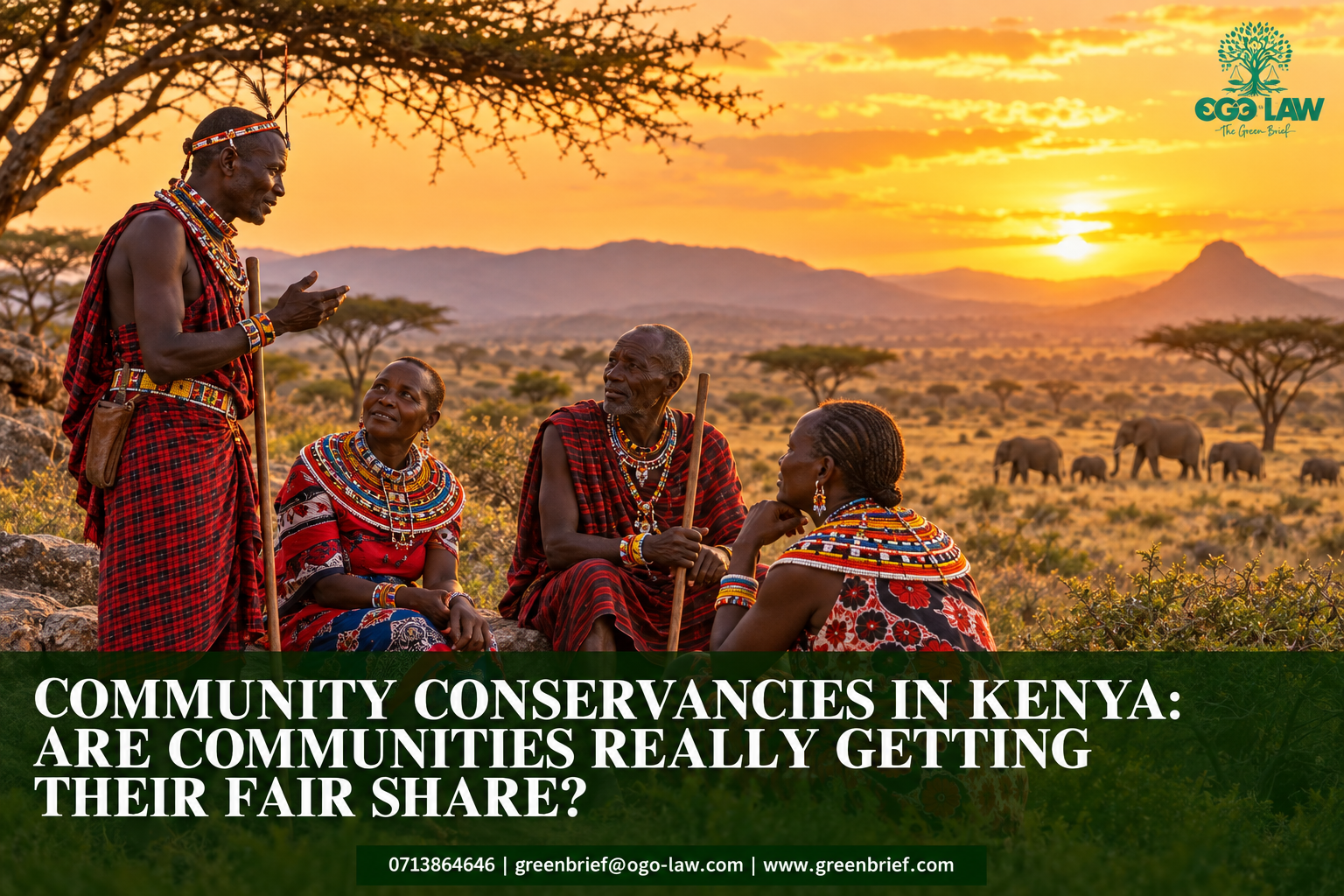
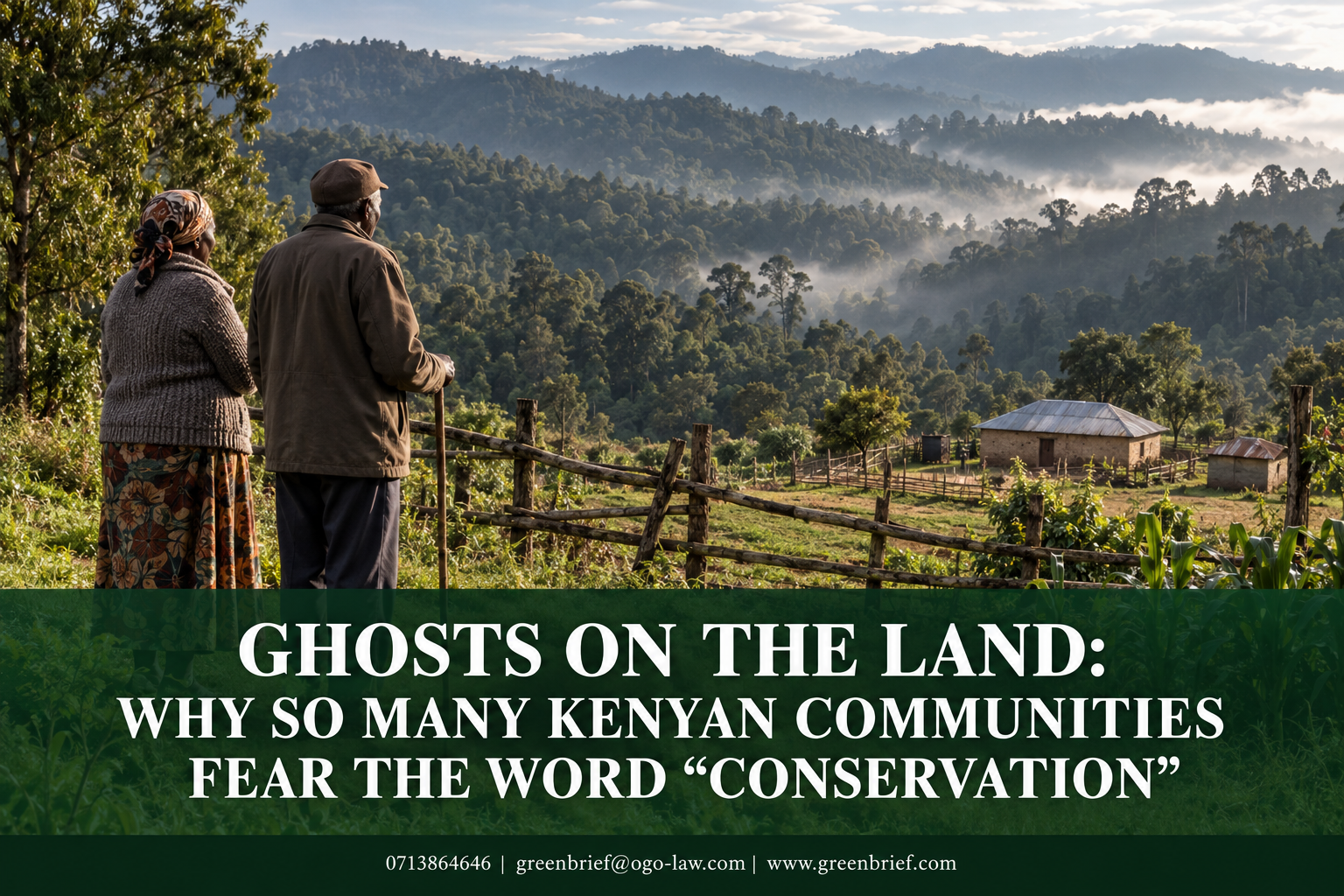

To grasp why a carbon credit deal, a biodiversity project, or a new conservancy can be met with folded arms and narrowed eyes especially from the elders in the room, you have to go back more than a century, to a time before Kenya was even called Kenya.
Where the Fear Was Born
In 1895, the land that would become Kenya was declared a British protectorate. Over the decades that followed, colonial administrators drew lines on maps and, with the stroke of a pen, turned land that communities had lived on, farmed, hunted, and buried their dead in, into “Crown Land.” The most fertile stretches became the so-called White Highlands, reserved for European settlers. Vast forests and grazing lands were fenced off as forest reserves, national parks and game reserves. Communities like the Kikuyu were pushed onto reserves. Forest peoples like the Ogiek and the Sengwer, who had lived inside these forests for generations as hunter-gatherers, were told they no longer belonged in their own homes. The Endorois were moved off the land around Lake Bogoria to make way for a game reserve.
There is a particular kind of silence that falls over a village meeting in parts of the Mau, the Cherangany Hills, or around Lake Bogoria any many parts of this country, when an official or a project officer stands up and says the word “conservation.” It is not the silence of people who don’t understand. It is the silence of people who understand too well.
None of this asked permission. None of it paid fair compensation. And when Kenya became independent in 1963, the pattern did not stop; it simply changed hands. Land that should have gone back to the communities it was taken from was instead allocated, often irregularly, to those with political connections. The government’s own Truth, Justice and Reconciliation Commission, set up after the violence that followed the 2007 election, spent years documenting this. Its final report, published in 2013, said plainly that land grievances are the single biggest driver of ethnic tension and conflict in Kenya, and that the colonial habit of “divide and rule” favouring some areas and communities while dispossessing others was never properly undone.
So when someone today asks an elder in Embobut or Mau to sign an agreement about carbon credits or conservation, they are not just asking about a project. They are asking someone to trust an institution that, in living memory or in the memory of their parents, took everything and rarely gave it back.
Three Stories That Explain the Silence
The Ogiek of the Mau Forest. For years, the Ogiek fought in court to be recognised as the rightful custodians of their ancestral forest, rather than as illegal squatters. In 2017, the African Court on Human and Peoples’ Rights agreed with them, ruling that Kenya had violated their rights by evicting them repeatedly from the Mau. In 2022, the Court went further, ordering Kenya to give the Ogiek back their land, compensate them, and crucially recognise their right to say yes or no to any conservation, development, or investment project on their land going forward. That should have been the end of the story. It wasn’t. In December 2025, the same Court found that Kenya still had not properly complied with either ruling, and ordered the government to submit a detailed plan, with real timelines, within six months.
The Sengwer of Embobut Forest. The Sengwer’s story is even more raw. In 2021, Kenya’s Court of Appeal ordered that nobody living in Embobut Forest at that time should be evicted. Yet in April and May of 2024, Kenya Forest Service guards burned down hundreds of Sengwer homes in an operation the government called necessary to protect the Cherangany water towers from degradation. Families lost everything, in the middle of the rainy season. The Sengwer say they are not squatters; their ancestors lived in that forest before Kenya was even a colony. This was not ancient history. It happened two years ago.
The Endorois of Lake Bogoria. Back in 2009, a regional human rights body found that Kenya had wrongfully pushed the Endorois off their land to create a game reserve, without proper consultation or compensation, and ordered the land returned along with a share of the reserve’s earnings. More than fifteen years later, that promise remains only partly kept.
Three different communities, three different decades, one repeating story: land is taken in the name of protecting nature, and the people who protected that same nature for generations are the ones who pay the price.
It Isn’t Just History,It’s Still Happening
This is the part that’s easy to miss if you only think of “historical injustice” as something that happened long ago. The Embobut burnings happened in 2024. The finding that Kenya was still failing the Ogiek happened in December 2025. So when communities today are wary of a new carbon project, they are not being irrational or stuck in the past, they are reading the present accurately.
Modern conservation and carbon finance can echo the old pattern in new clothes. A company or agency negotiates a deal with government officials, or with a handful of community representatives, rather than with the whole community as the law now says they should. Money that is promised in benefit-sharing agreements is often vague about how much, when, and to whom. Kenya’s newer carbon market law does require these projects to sign Community Development Agreements that share a portion of earnings with communities but the law itself does not spell out exactly how that share should be calculated, which leaves a lot of room for a well-resourced project developer to out-negotiate a community that has never seen a carbon contract before. Add to that the fact that most community land in Kenya still isn’t formally registered, and you have communities being asked to negotiate away rights to land they don’t yet hold clear legal title to.
For an elder who watched or heard firsthand from a parent who watched a forest reserve swallow their grazing land, or a game park swallow their home, this is not abstract. It is the same movie, and they already know how it ends if they’re not careful.
What the Law Actually Says Now
Here is the part that often gets lost in the fear: Kenya’s law today is genuinely different from the colonial and early independence-era law that caused all this damage. The 2010 Constitution rebuilt the foundation. It protects the right to property and says land can only be taken by the state for a clear public purpose, with prompt and fair compensation. It recognises community land as its own protected category, owned by the community itself, not just held at the government’s pleasure. It requires that investments benefit the local communities where they happen, and that the environment be managed sustainably with the benefits shared fairly among the people.
Built on top of that constitutional foundation are several laws that speak directly to this fear. The National Land Commission has a specific job, given to it by the Constitution, to investigate historical land injustices grievances going all the way back to 1895 and recommend how to fix them. For years, a rule said people had only five years to bring such a claim, which shut a lot of legitimate grievances out. In late November 2025, the High Court struck that rule down, ruling that this constitutional duty was never meant to expire. That is a real, recent win worth knowing about.
The Community Land Act of 2016 finally gave legal teeth to community ownership, meaning that once a community formally registers its land, that land belongs to the community the same way any title-holder owns their property, and no one can take it without following the law and paying fairly for it. The same Act requires that when natural resources on community land are used commercially, the benefits must be shared with the community.
The Wildlife Conservation and Management Act says wildlife-related benefits from tourism to compensation for crop or livestock losses caused by wild animals must be shared with the people living alongside that wildlife, and that no one can commercially explore a community’s biological resources without first getting that community’s consent and agreeing on how benefits will be shared.
And Kenya’s newer climate law, updated in 2023 with detailed regulations that came into force in 2024, now requires every carbon credit project to carry out a full environmental and social impact assessment and to sign a Community Development Agreement with the affected community before it can register a project or sell a single credit.
On paper, this is one of the more progressive legal frameworks in the region. The problem, as the Embobut fires and the Ogiek’s unfinished case show, is not the words in the statute books. It’s what happens after the ink dries.
So Is Any of This Actually Working?
Partly. The 2025 court ruling opening up historical land claims again is real progress, as is the existence of the Community Land Act and the wildlife benefit-sharing rules, which simply did not exist a generation ago. International courts have also proven willing to rule against Kenya when it falls short, giving communities somewhere to turn when domestic processes stall.
But the gaps are just as real. The National Land Commission’s mandate to fix historical injustices has been stuck for over a decade waiting for Parliament to pass a proper law to guide it a bill was drafted back in 2014 and still hasn’t been enacted. Communities’ land often isn’t registered, which weakens their hand at the negotiating table. The carbon market law doesn’t say exactly how much of the money communities should get, so that fight happens quietly, deal by deal, usually without the community having a lawyer of its own in the room. And enforcement agencies on the ground, the same ones burning down Sengwer homes in 2024, don’t always seem to have caught up with what the courts and the Constitution now require of them.
That is the honest answer to why FPIC meetings the free, prior and informed consent processes that are supposed to let communities decide for themselves, so often stall, or meet resistance that outsiders read as stubbornness. It isn’t stubbornness. It’s a community applying the only test that has ever mattered to them: has this government, or this kind of project, ever kept its word to us before? Right now, the honest record gives them plenty of reason to still be asking.
What Needs to Change, and Who Needs to Change It
If this is going to get better, it will not be because communities become more trusting. It will be because the institutions involved become more trustworthy, and are seen to be.
The National Land Commission needs to move quickly and visibly now that the five-year limitation has been struck down, clearing its backlog and prioritising claims from communities currently facing conservation or carbon projects, so that land ownership questions are settled before consent conversations begin, not argued about at the same time. Parliament needs to finally pass the dedicated law on historical land injustices that has been sitting half-finished since 2014, and it should use the same opportunity to spell out, in the carbon markets law, exactly how much money communities are entitled to and how it should be calculated, instead of leaving that to be quietly negotiated away. The Ministry of Environment, Climate Change and Forestry and the Kenya Forest Service need to stop treating eviction as a conservation tool in places where land claims are still unresolved, and need to finish what the African Court has already ordered them to do for the Ogiek, including the basic step of publishing the judgments so people can actually see what was promised. The National Environment Management Authority, which now runs the national carbon registry, should refuse to register any carbon project that hasn’t signed a genuine, independently negotiated agreement with the community involved, and should make those agreements public so they can be checked. County governments should be helping communities get their land registered as a first step, not an afterthought, before any outside project comes calling. And project developers and conservation organisations themselves need to do their homework before they arrive at a village meeting checking whether the land they want to work on carries an unresolved historical claim or a history of eviction and then build grievance and payment systems the community can enforce on its own, not ones that depend on the developer’s goodwill.None of this will undo 1895. But it can, slowly, start to give communities a reason to believe that this time, the story ends differently.