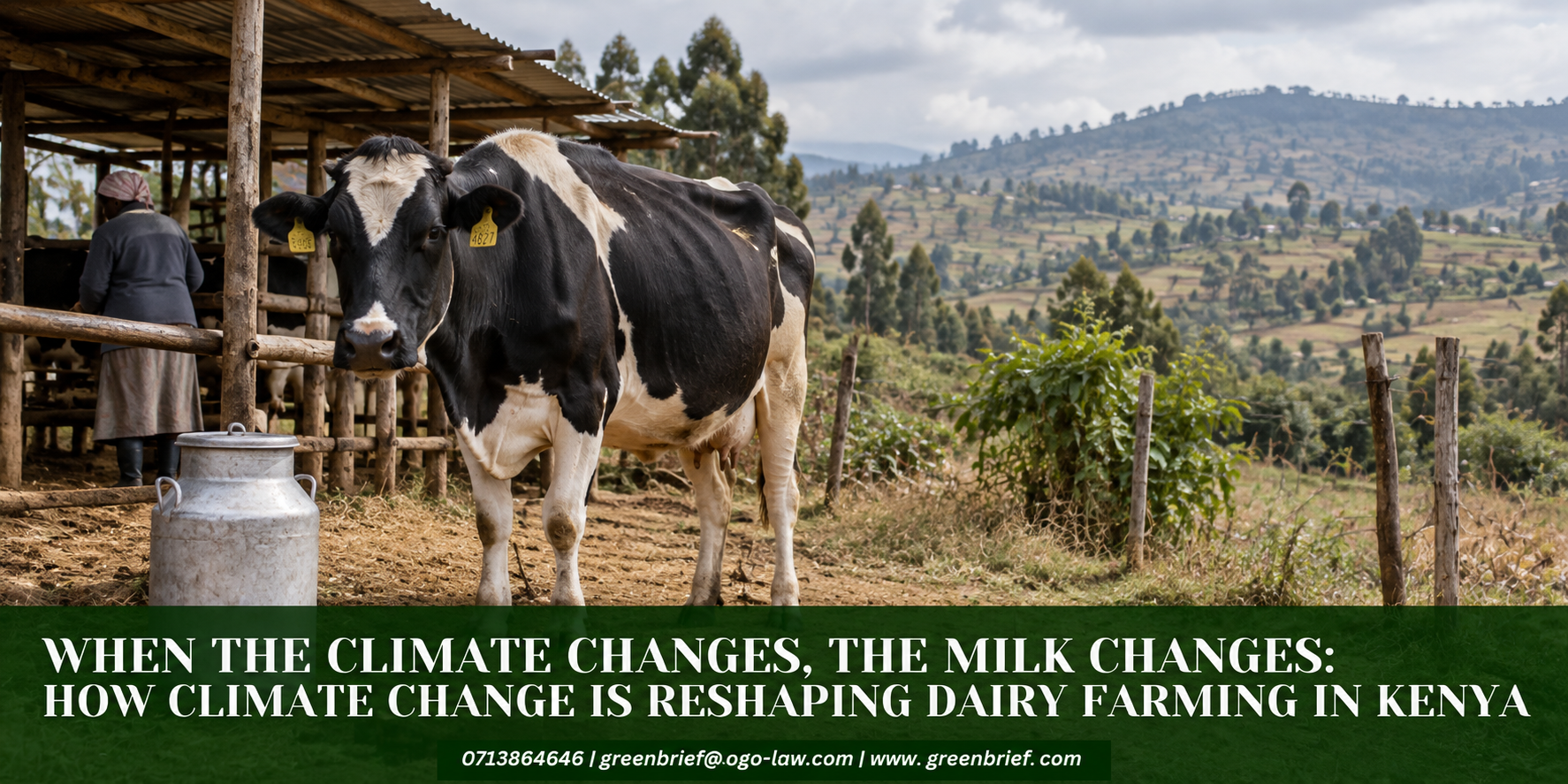

In recent weeks, Kenyans have increasingly noticed something unusual in shops and supermarkets: milk is becoming harder to find. Shelves that would ordinarily be stocked with familiar brands have been left sparsely stocked or empty, while some retailers have introduced purchase limits. For many Kenyan households, milk is an ordinary part of everyday life. It is poured into tea, served with breakfast and sold in shops, markets and milk collection centres across the country. The Kenya Dairy Board has described the situation as temporary supply constraints, with formal milk deliveries to processors falling by 3.7 per cent, from 84.4 million litres in June 2026 to 81.3 million litres in July. Preliminary indications pointed to a further decline in August.
The immediate question for consumers is where the milk has gone. But behind the empty shelves is a much larger story about what is happening on Kenya’s dairy farms. Prolonged dry conditions have reduced pasture and fodder availability, putting pressure on dairy farmers and their animals. Agriculture officials have attributed the current supply constraints largely to inadequate rainfall and resulting feed shortages, while other industry voices have pointed to factors such as rising operating costs, distribution challenges and farmers selling milk through informal channels.
This is where climate change enters the conversation. Climate change does not necessarily cause a milk shortage through one single event. Instead, it can affect the conditions that dairy farming depends on: rainfall, pasture, water availability, animal health and temperature. When these conditions become increasingly unpredictable, the consequences can move from the farm to the processor, from the processor to the retailer and ultimately to the consumer.
FROM CHANGING WEATHER TO A CHANGING MILK SUPPLY
Dairy farming is closely connected to the climate. Cows need sufficient nutritious feed and water to maintain their health and produce milk. Much of Kenya’s dairy production is carried out by smallholder farmers whose systems depend, directly or indirectly, on rainfall. When rains fail or become increasingly unpredictable, pasture and fodder can become scarce.
The current situation provides a clear illustration of this relationship. Prolonged dry conditions have affected the availability of pasture and animal feed in several milk-producing areas. When there is less nutritious forage available, farmers may have to purchase feed at higher prices or reduce the amount of feed available to their animals. A poorly nourished cow cannot maintain the same level of milk production as a well-fed one. The result is reduced output at farm level and, eventually, less milk entering the formal supply chain.
Recent climate research in Kenya’s dairy sector has identified erratic rainfall, declining pasture quality, heat stress and rising production risks as growing challenges for smallholder farmers. CGIAR research also notes that heat stress and reductions in the quantity and quality of fodder can harm animal health and reduce both the quantity and quality of milk produced.
WHEN THE HEAT RISES, MILK PRODUCTION CAN FALL
Rainfall is only one part of the climate story. Rising temperatures can directly affect dairy cattle through heat stress.
Cows experiencing prolonged heat stress may eat less, drink more water and divert energy away from production and reproduction as their bodies attempt to regulate temperature. Research using Kenyan dairy records has examined the relationship between heat stress and milk production, confirming that heat stress is an important factor affecting dairy productivity in tropical environments.
For farmers, this means that climate change can affect milk production even when there is no drought. Higher temperatures can reduce animal productivity, while drought at the same time reduces access to the feed and water needed to help animals cope with that heat.
The two pressures can therefore reinforce each other. Less rain means less pasture. Less pasture means more expensive feed. Higher temperatures increase the animal’s stress and water requirements. Together, these pressures can make dairy farming more expensive while reducing the amount of milk produced.
WATER IS PART OF THE MILK STORY
It is easy to think of water scarcity as an agricultural problem separate from milk production. In reality, the two are closely connected.
Water is essential for dairy cattle to regulate body temperature, digest food and maintain normal physiological functions. During periods of high temperatures, adequate water becomes even more important. Yet drought can make water increasingly difficult to access, forcing farmers to travel greater distances, invest in alternative sources or purchase water.
Climate assessments of Kenya’s dairy sector identify drought-related water scarcity and reduced pasture quality as significant risks. These pressures can affect not only the quantity of milk produced but also the cost of keeping dairy animals.
THE SHORTAGE DOES NOT BEGIN AT THE SUPERMARKET
By the time a consumer encounters an empty supermarket shelf, the climate-related pressure may have been building for months. A farmer experiencing poor rainfall may produce less milk. A cooperative or milk collection centre consequently receives lower volumes. A processor then has less raw milk available for pasteurisation and packaging. Retailers receive fewer deliveries, and consumers eventually notice fewer packets on the shelf.
This demonstrates why milk shortages should not be viewed solely as a retail problem. The supermarket shelf is the final point in a much longer chain.
Climate change can affect several parts of that chain simultaneously. Extreme rainfall can damage roads and disrupt transportation, while drought can reduce production. Changes in temperature and rainfall can also increase livestock health risks. Recent climate assessments for Kenya identify high temperatures, drought and heavy precipitation as hazards affecting different stages of dairy production, including feeding, veterinary services, storage, transportation and marketing.
WHAT DOES THIS MEAN FOR DAIRY FARMERS?
For farmers, declining milk production is not simply a matter of producing fewer litres. It can mean losing an important source of household income while facing higher production costs.
When pasture is scarce, farmers may have to purchase more feed. When water sources decline, obtaining water can become more expensive. When animals experience heat stress or become more vulnerable to disease, veterinary costs can increase.
This makes climate change an economic issue for dairy farmers as much as an environmental one. Recent research on Kenyan dairy farmers has highlighted growing climate risks alongside difficulties accessing the finance needed to invest in adaptation.
BUILDING A MORE CLIMATE-RESILIENT DAIRY SECTOR
The current milk shortage also raises a broader question: how can Kenya build a dairy sector that is better prepared for increasingly unpredictable climatic conditions?
Climate resilience will require more than responding to shortages after they occur. Farmers need access to reliable climate information, better fodder systems, water-harvesting and storage infrastructure, appropriate animal housing and veterinary services. Climate-smart approaches such as improved feeding, breeding, animal-health management and manure management can also improve productivity while helping farmers adapt to changing conditions.
Access to finance will be equally important. Adaptation requires investment, but many smallholder farmers have limited capital to improve their farms. Climate finance that is accessible and appropriate for small-scale dairy farmers could help them invest before climate shocks become crises.
At the same time, the dairy sector must address its own environmental footprint. Livestock production contributes to greenhouse gas emissions, including methane, meaning the future of dairy farming requires both adaptation to climate change and efforts to reduce emissions where possible. Kenya’s dairy sector is already the focus of initiatives seeking to combine productivity, climate resilience and lower-emission production systems.
FROM AN EMPTY SHELF TO A BIGGER CLIMATE QUESTION
The milk shortage currently being experienced in parts of Kenya is more than an inconvenience for consumers. It offers a visible reminder of how closely food systems are connected to environmental conditions.
When rainfall fails, pasture suffers. When pasture suffers, feed becomes more expensive. When cows receive inadequate nutrition or experience heat stress, milk production can decline. When farm-level production declines, processors receive less raw milk. And when processors have less milk to work with, the effects can eventually appear on supermarket shelves.
Not every milk shortage can be attributed to climate change alone. Market dynamics, production costs, distribution challenges, farmer payment structures and the movement of milk between formal and informal markets can also influence supply. Current industry reporting reflects these multiple factors.
But the climate connection is becoming increasingly difficult to ignore. Kenya’s dairy sector depends on natural systems that are themselves under growing climate pressure.
The question, therefore, is not simply whether there will be enough milk on supermarket shelves tomorrow. It is whether Kenya can build a dairy system resilient enough to keep farmers productive, animals healthy and food supplies stable in a changing climate.
The next time a packet of milk disappears from a supermarket shelf, the story behind that empty space may begin much further away, on a farm where the rains did not come, the pasture did not grow, the water ran low and a cow produced less milk.
Climate change can begin with a change in the weather. But its consequences can travel all the way to our breakfast table.