
Introduction
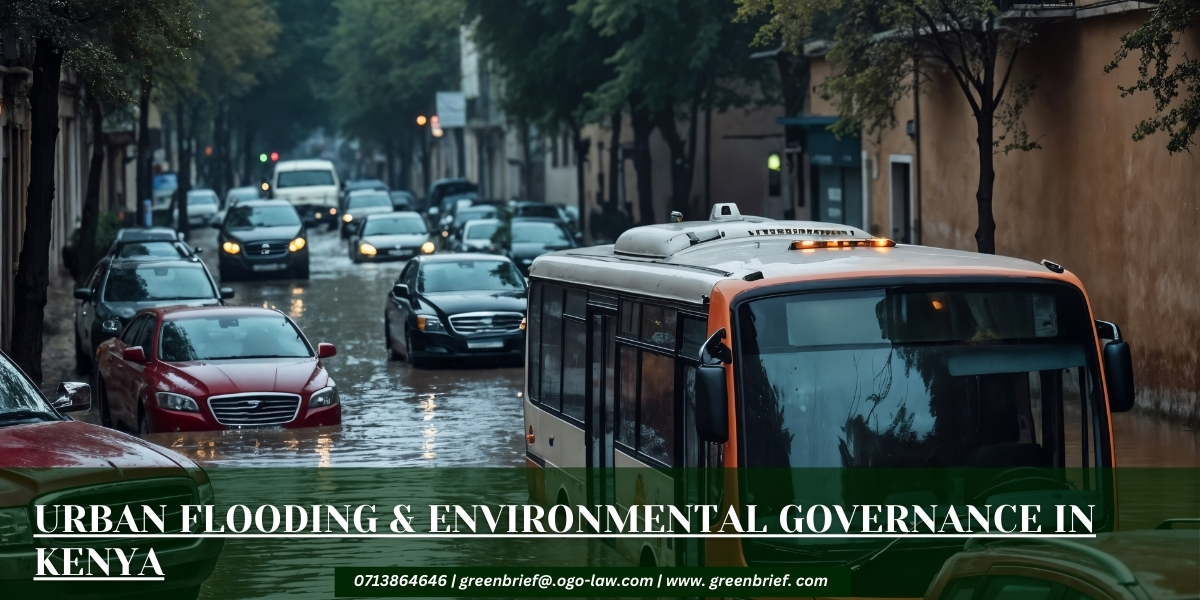
Each rainy season in Kenya often brings similar scenes; flooded streets, heavy traffic, damaged infrastructure and communities displaced by rising waters. In cities such as Nairobi, heavy rainfall frequently overwhelms drainage systems and disrupts economic activity. These events are often described as natural disasters caused by unusually heavy rainfall.
However, a closer look reveals something more complex. Urban flooding in Kenya reflects the convergence of climate change, environmental degradation, and gaps in environmental governance. The heavy rains experienced recently exposed a deeper structural weakness in how ecosystems are regulated, protected, and integrated into urban development.
Climate change
Climate change is already reshaping rainfall patterns across Kenya. Warmer atmospheric temperatures allow air to hold more moisture, increasing the likelihood of intense rainfall. This, in turn, puts intense pressure on urban drainage systems which were originally designed for lower rainfall intensity.
However, climate change alone does not fully explain the amounts of flooding witnessed in Kenya. Rather, climate change acts as a multiplier, amplifying vulnerabilities created by degraded ecosystems and poorly regulated use.
Environmental Governance Problem
Urban flooding in Kenya is increasingly linked to the gradual loss of natural ecosystems that once helped regulate rainfall and manage water flow. In the past, wetlands, riparian reserves, and open floodplains functioned as natural buffers that absorbed excess rainwater and reduced the risk of flooding. Wetlands acted like sponges, soaking up rainfall and slowing the movement of water, while vegetation along riverbanks stabilised the soil and protected waterways from erosion.
Floodplains also allowed rivers to spread out safely during periods of heavy rainfall. However, rapid urban expansion has significantly altered these landscapes. Many wetlands have been drained to create space for housing and infrastructure, riparian reserves have been encroached upon, and natural drainage channels are often obstructed by roads, buildings, and informal settlements. As these natural control systems continue to disappear, rainwater flows more quickly across urban surfaces and accumulates in drainage systems and rivers, increasing the likelihood and severity of flooding during heavy rains.
Legal Frameworks
The Constitution of Kenya, 2010, provides a strong foundation for environmental protection and governance in the country. Under Article 42, every person is guaranteed the right to a clean and healthy environment. In addition, Article 69 places a duty on the State to ensure the sustainable use, management, and conservation of natural resources for the benefit of present and future generations.
Supporting this constitutional framework is the Environmental Management and Coordination Act (EMCA), which establishes key mechanisms for environmental regulation. One of its most important tools is the Environmental Impact Assessment (EIA) report, which requires projects that are likely to affect the environment to undergo assessment before they are approved. Together, these provisions create a solid legal framework aimed at promoting responsible environmental management and sustainable development in Kenya.
Decisions
Kenyan Courts have increasingly affirmed that environmental protection is not merely a policy objective, but a constitutional obligation.
In Save Lamu & 5 Others vs National Environmental Management Authority (NEMA) & Another, the National Environmental Tribunal revoked the licence for the proposed Lamu coal-fired power plant after finding significant deficiencies in the environmental impact assessment process.
Enforcement Gap
Despite a strong legal framework, significant challenges remain in the enforcement of environmental protections;
- Riparian reserves are quietly encroached upon;
- Wetlands continue to be converted to urban land;
- EIA reports sometimes fail to address environmental impacts comprehensively.
Where environmental protection is weakly enforced, ecological degradation gradually converts heavy rainfall into recurring urban flooding.
Why this matters
Urban flooding carries serious social, economic, and environmental consequences. These include;
- Public safety risks as floodwaters damage homes, roads, and public infrastructure;
- Economic disruptions affecting transport networks, businesses and supply chains;
- Environmental degradation as polluted runoff contaminates rivers and wetlands;
- Increased climate vulnerability as degraded ecosystems reduce the country’s ability to adapt to climate change conditions.
Lesson
Climate change rarely creates entirely new environmental problems. Rather, it tends to intensify existing vulnerabilities, particularly in areas where ecosystems have already been degraded. In this context, urban flooding reflects not only the impacts of changing climate patterns but also underlying weaknesses in environmental governance.
Even with the protections established under the Constitution of Kenya, 2010 and regulatory mechanisms such as those provided by the Environmental Management and Coordination Act (EMCA), gaps in enforcement, urban planning, and institutional coordination can undermine effective environmental management. As a result, urban flooding becomes more than just a climate-related challenge—it also serves as a critical test of how well environmental laws are implemented, how cities are planned, and how institutions work together to protect ecological systems.
Way forward
- Protect and restore riparian reserves.
River corridors should be rehabilitated and safeguarded from further encroachment. Protecting these areas helps stabilise riverbanks, maintain natural drainage systems, and reduce the risk of flooding during periods of heavy rainfall.
- Treat wetlands as ecological infrastructure.
Wetlands play a crucial role in absorbing excess rainwater and regulating water flow. They should be recognised as natural flood-control systems and integrated into urban planning and land-use decisions rather than being converted for development.
- Strengthen climate integration in EIA reports.
Development approvals should incorporate future climate projections and evaluate cumulative environmental impacts to ensure that projects do not increase flood vulnerability over time.
- Improve coordination between the National and County Governments.
Effective flood management requires stronger collaboration between environmental regulators, planning authorities, and county governments to ensure consistent enforcement of environmental laws and planning policies.
- Invest in nature-based climate adaptation.
Governments and urban planners should prioritise solutions such as restoring wetlands, protecting urban green spaces, and rehabilitating river ecosystems to enhance resilience against flooding and other climate-related risks.