
When conversations about climate change dominate global headlines, they are often accompanied by images of flooded cities, raging wildfires, powerful storms, or prolonged droughts. These disasters are visible, dramatic, and difficult to ignore. Yet one of the deadliest consequences of climate change often receives far less attention despite affecting millions of people every year: Heat.
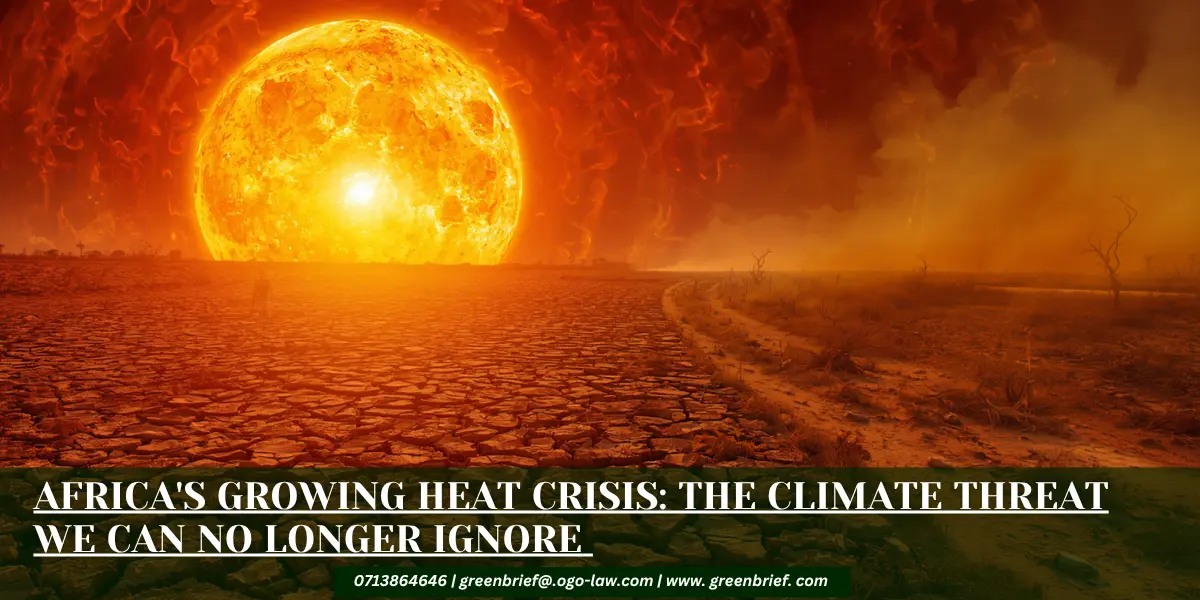
Heat has always been part of Africa’s story.
Unlike floods that wash away homes or storms that leave destruction in their wake, extreme heat is a silent crisis. It does not announce itself with dramatic visuals. There are no collapsed buildings, no emergency evacuations, and often no single moment that captures public attention. Instead, heat accumulates quietly. Day after day, temperatures rise. Rivers shrink. Crops wither. Wildlife struggles. Workers become exhausted. Hospitals record increasing cases of heat-related illnesses. Entire economies slow down.
Across Africa, this silent crisis is becoming impossible to ignore.
For generations, Africans have lived with heat. The continent is home to some of the hottest regions on Earth, and communities have long developed ways of adapting to high temperatures. Traditional architecture incorporated natural ventilation and cooling. Farmers understood seasonal weather patterns. Communities organised their daily activities around the movement of the sun. Heat was part of life, but it was largely predictable.
Today, however, the nature of that heat is changing.
Climate scientists have repeatedly warned that global temperatures are increasing due to human-induced climate change. Africa, despite contributing the least to historical greenhouse gas emissions, is among the regions most vulnerable to its impacts. Average temperatures across the continent are rising, heatwaves are becoming more frequent and intense, and many communities are experiencing longer periods of extreme temperatures than ever before.
The implications of this trend stretch far beyond discomfort. Extreme heat is increasingly emerging as a development challenge, an environmental challenge, a public health challenge, and a social justice challenge all at once.
Perhaps nowhere is this more evident than in agriculture.
Agriculture remains the backbone of many African economies, employing a significant proportion of the population and supporting millions of livelihoods. Yet farming is highly sensitive to temperature changes. Crops require specific conditions to grow, flower, and produce yields. As temperatures rise beyond optimal thresholds, productivity declines.
Even where rainfall remains sufficient, excessive heat can reduce crop yields by increasing evaporation, drying out soils, and placing physiological stress on plants. Maize, wheat, beans, and many other staple crops become less productive under prolonged high temperatures. The result is not only reduced incomes for farmers but also increased food insecurity for entire populations.
The challenge becomes even more severe when heat is combined with drought. Across parts of East Africa, Southern Africa, and the Horn of Africa, recurring droughts have become more intense and prolonged. High temperatures accelerate the loss of moisture from soils and water bodies, worsening already difficult conditions for both people and ecosystems.
Livestock production faces similar threats. Cattle, goats, sheep, and camels are central to the livelihoods of millions of Africans. Yet animals are also vulnerable to heat stress. Extreme temperatures can reduce milk production, affect reproduction rates, increase disease susceptibility, and lead to higher mortality during prolonged heat events. For pastoralist communities that depend heavily on livestock, these impacts can be devastating.
While rural communities face mounting pressures, Africa’s cities are becoming hotspots in a different sense.
The continent is urbanising faster than any other region in the world. Cities such as Nairobi, Lagos, Cairo, Johannesburg, Addis Ababa, Kinshasa, and Dar es Salaam continue to expand as populations grow and economic opportunities attract new residents. However, much of this growth is occurring without adequate consideration of climate resilience.
Concrete buildings, paved roads, metal roofs, and limited vegetation combine to create what scientists call urban heat islands. These areas absorb heat during the day and release it slowly at night, causing cities to remain significantly warmer than surrounding rural areas. In some locations, temperatures within urban centres can be several degrees higher than nearby countryside.
For many residents, particularly those living in informal settlements, this presents a serious challenge. Housing is often poorly insulated and constructed using materials that trap heat. Access to electricity may be unreliable or unaffordable, making cooling solutions inaccessible. Water shortages can further increase vulnerability during periods of extreme temperatures.
The result is that some of the people least responsible for climate change are among those most exposed to its consequences.
Heat also has significant implications for public health.
The human body functions within a narrow temperature range. When temperatures become excessively high, especially for extended periods, the body’s ability to regulate itself can become overwhelmed. Heat exhaustion, dehydration, heatstroke, cardiovascular stress, and respiratory complications all become more common.
Children, older persons, pregnant women, individuals with underlying health conditions, and outdoor workers are particularly vulnerable. Yet heat-related illnesses are often underreported across Africa, meaning the true scale of the problem may be far greater than current statistics suggest.
Beyond direct health impacts, extreme heat can influence the spread of diseases, affect water quality, and strain healthcare systems already facing multiple challenges. As temperatures continue to rise, heat-related health risks are expected to become an increasingly important policy concern across the continent.
The environmental consequences are equally profound.
Africa is home to some of the world’s most important ecosystems, from the rainforests of the Congo Basin and the savannahs of East Africa to the wetlands, mangroves, mountains, and deserts that support extraordinary biodiversity. These ecosystems are not merely environmental assets; they are the foundation of livelihoods, tourism, food systems, and climate resilience.
Rising temperatures place these ecosystems under immense pressure. Forests become more vulnerable to drought and fire. Wetlands dry out. Rivers experience reduced flows. Wildlife species struggle to adapt to changing habitats and shifting ecological conditions.
In East Africa, for example, changing temperatures are already affecting mountain ecosystems that serve as critical water towers. Forests such as those within the Mount Kenya ecosystem play a crucial role in regulating water flows, supporting biodiversity, and moderating local climates. As temperatures rise and ecosystems become stressed, the services they provide to millions of people become increasingly vulnerable.
This highlights a critical reality: protecting nature is also a form of climate adaptation.
Forests cool landscapes. Wetlands regulate water supplies. Urban trees reduce temperatures in cities. Mangroves protect coastlines and support fisheries. Healthy ecosystems provide natural defences against many of the impacts associated with rising heat.
Yet despite the growing severity of the challenge, heat remains one of the most overlooked climate risks in Africa.
Part of the reason is visibility. Heat rarely produces the dramatic imagery associated with floods or wildfires. Its impacts are dispersed across communities, sectors, and ecosystems. It affects productivity, health, education, biodiversity, and economic growth simultaneously, making it difficult to quantify through a single event.
However, the cost of inaction is becoming increasingly clear.
According to climate experts, many African countries will need to rethink how they design cities, construct buildings, manage water resources, protect ecosystems, and safeguard public health in a warming world. Urban greening initiatives, climate-responsive architecture, early warning systems, heat action plans, ecosystem restoration, and renewable energy investments will all play critical roles in building resilience.
At the same time, the international community must recognise the profound injustice at the heart of this crisis. Africa contributes only a small fraction of global greenhouse gas emissions, yet it faces some of the most severe consequences of climate change. Addressing extreme heat therefore requires not only local adaptation efforts but also meaningful global action to reduce emissions and support climate resilience in vulnerable regions.
The story of climate change in Africa is often told through droughts, floods, and food insecurity. Increasingly, however, another story is emerging, one written in rising temperatures, warming cities, stressed ecosystems, and communities struggling to adapt to a hotter world.
Heat may be invisible, but its impacts are everywhere.
As Africa’s temperatures continue to climb, one thing is becoming increasingly clear: the continent’s future will depend not only on how it responds to climate change, but on how it learns to live, adapt, and thrive in an era of unprecedented heat.